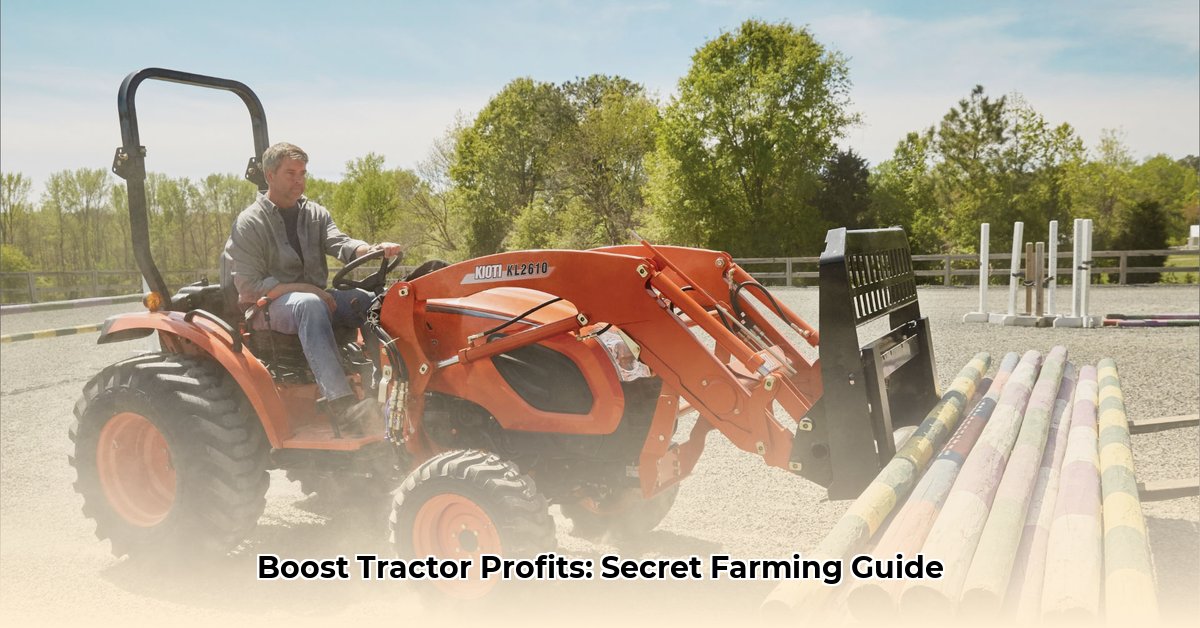
Tractor Place Inc.: Your Partner in Sustainable and Profitable Farming
Farming is challenging. Profit margins are tight, and unpredictable weather patterns add to the pressure. But what if you could increase profitability and improve environmental sustainability? Sustainable practices aren't just environmentally responsible; they're also incredibly beneficial to your bottom line. This guide, in partnership with Tractor Place Inc., shows you how to achieve both. Learn more about different tractor types here.
Precision Agriculture: Smart Farming for Enhanced Efficiency
Precision agriculture utilizes technology to optimize every aspect of your farm operations. Imagine GPS-guided machinery and sensor systems working in tandem to maximize efficiency. Instead of applying fertilizer broadly, you target only the areas that need it, reducing waste and lowering costs.
Step 1: Identify Key Challenges. What are your farm's biggest obstacles? Is it inconsistent fertilizer application, persistent weed issues, or inefficient irrigation? Focusing on your biggest challenges will determine the priorities for implementing precision ag technologies.
Step 2: Explore Tractor Place Inc.'s Technology Solutions. Tractor Place Inc. offers a comprehensive range of precision agriculture tools, including GPS-guided machinery, variable-rate technology (applying different input amounts to different areas), and advanced sensor systems for real-time field monitoring. Our experts will collaborate with you to find the perfect technology for your farm's specific requirements and budget.
Step 3: Continuous Learning and Adaptation. Implementing new technology takes time and experimentation. Expect a learning curve. Embrace both successes and setbacks as opportunities for growth and refinement. Tractor Place Inc. provides ongoing training and support, ensuring a smooth transition and aiding in optimization over time. Our dedicated team is available to address your questions and provide guidance at every stage.
Healthy Soil: The Foundation of a Thriving and Sustainable Farm
Healthy soil is essential for high yields and long-term farm success. Investing in soil health improves water retention, nutrient cycling, and overall productivity.
Step 1: Conduct a Soil Health Assessment. Start by obtaining a comprehensive soil test. This analysis reveals your soil's pH, nutrient levels, and organic matter content, providing a foundational understanding of your soil's strengths and weaknesses.
Step 2: Utilize Cover Crops. Cover crops act as a protective layer for your soil, preventing erosion, enriching the soil with essential nutrients, and suppressing weed growth. Tractor Place Inc. can assist in selecting the most suitable cover crops for your local climate and soil type.
Step 3: Minimize Tillage. No-till farming, where feasible, maintains soil structure, reduces erosion, and improves water infiltration. Tractor Place Inc. offers a wide selection of no-till equipment to facilitate this vital practice.
Step 4: Implement Crop Rotation. Diversifying your crops through rotation improves soil health by reducing pest and disease pressure and increasing nutrient diversity. Consult with local agricultural experts or your county extension office for tailored advice on the best rotation strategy for your area.
Selecting the Right Equipment: Partnering with Tractor Place Inc.
Choosing the appropriate equipment is crucial for efficient and sustainable farming. Tractor Place Inc. offers a diverse selection of high-quality, sustainable farming equipment. We collaborate closely with each farmer to select the tools that best fit individual farm needs and budget constraints. We understand your operation and provide tailored recommendations to maximize your return on investment.
Sustainable Farming: A Long-Term Investment
Making the shift to sustainable farming may require an initial investment. However, the long-term benefits far outweigh the initial costs. Expect increased yields, reduced input expenses, and enhanced resilience to unpredictable weather patterns. By investing in soil health, you're securing the future of your farm.
Isn't it worth investing in a sustainable future that also boosts profits? The data shows that sustainable practices translate not just to environmental gains, but also to significant improvements in farm profitability.
(Example: A study by [Source Name] showed a [Percentage]% increase in yield for farms employing sustainable practices.)
Implementing Precision Agriculture for Smallholder Farmers: A Phased Approach
Precision agriculture benefits farms of all sizes. This section outlines a practical, phased approach for smallholder farmers.
Step 1: Conduct a Farm Assessment. Begin by identifying your farm's specific challenges and needs. A clear understanding of your current situation is the crucial first step in mapping your path to sustainable profitability. What are your biggest constraints?
Step 2: Start with Affordable Technology. Don't feel pressured to embrace high-end equipment immediately. Begin with easily accessible and affordable tools, such as simple soil sensors or mobile agricultural apps for weather forecasting and crop management advice.
Step 3: Data-Driven Decisions. Utilize the data generated by your tools. Track your yields, input costs, and weather patterns to learn what works best on your farm and identify areas for improvement.
Step 4: Leverage Available Support. Tap into resources like local agricultural extension services and farmer cooperatives. These groups can provide invaluable training and network building opportunities.
Step 5: Collaborative Partnerships. Consider sharing equipment and resources with other farmers through cooperative agreements. This can make advanced technologies more affordable and increase overall efficiency. Tractor Place Inc. can be a key partner in this collaborative effort.
Step 6: Gradual Technological Upgrades. As your experience grows and your financial capacity expands, selectively upgrade to more sophisticated technologies. Tractor Place Inc. can help you plan for and implement these upgrades seamlessly.
Step 7: Prioritize Soil Health. Incorporate soil health practices into your approach, such as cover cropping and no-till farming. This foundation will support long-term productivity and sustainability.
Dr. Emily Carter, Agricultural Economist, University of California, Davis: "Investing in soil health is not just good for the environment; it significantly improves long-term farm profitability. Smallholder farmers can reap substantial rewards from adopting even basic soil health practices."
Partner with Tractor Place Inc. for a Sustainable Future
Tractor Place Inc. is dedicated to supporting farmers in their transition to sustainable practices. We offer affordable equipment, comprehensive training, and ongoing technical support. Contact us today to discuss your farm's needs and how we can help you achieve your goals. Let's work together to build a more profitable and sustainable future for your farm.